



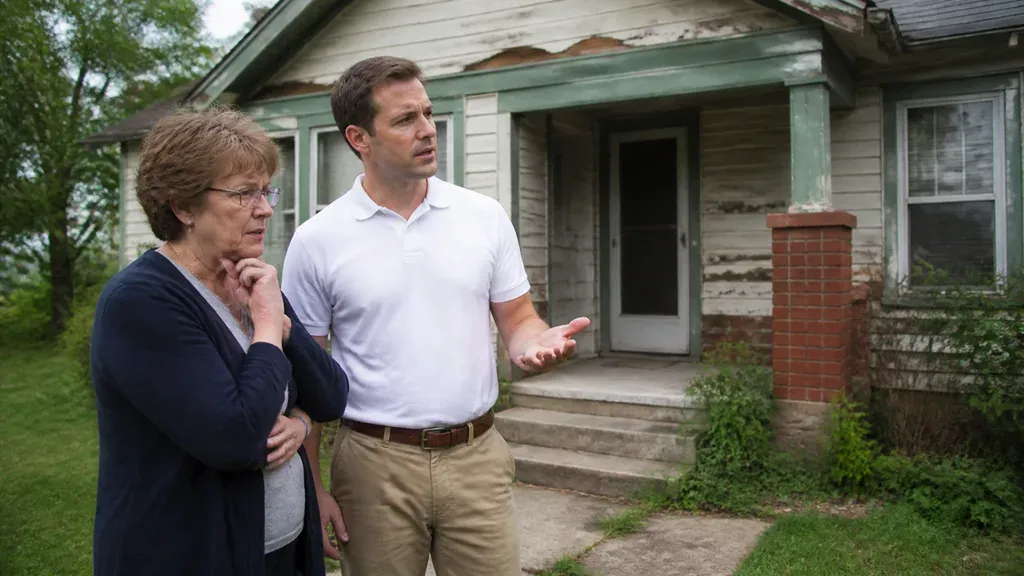
Sell A Damaged House in Need of Repairs in Indianapolis
This guide covers the practical options available to Indianapolis sellers with damaged or repair-heavy properties, the real tradeoffs between each path, and what to expect at each step.
What Counts as a "Damaged" Property?
For the purposes of this guide, "damaged" covers a broad range of property conditions that make a standard listing difficult or unattractive:
- Structural issues: Foundation cracks, settling, roof failure, load-bearing wall damage
- System failures: Outdated or failed electrical (knob-and-tube wiring, undersized panels), non-functional HVAC, plumbing with active leaks or galvanized pipe failure
- Water and mold damage: Basement flooding history, active moisture intrusion, visible mold, rotted framing
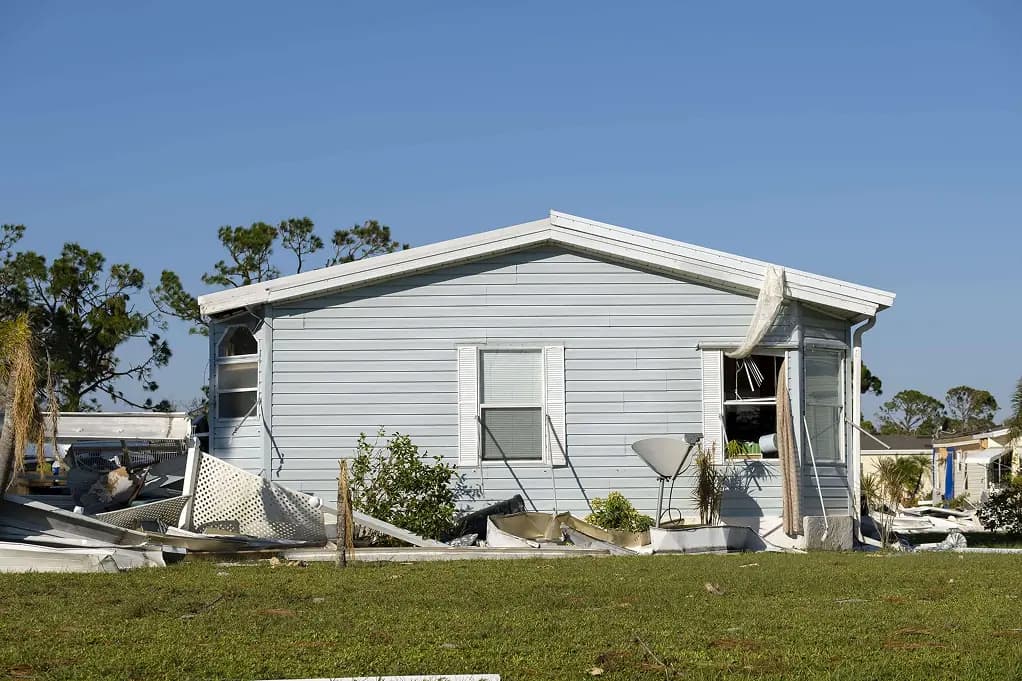
- Fire or storm damage: Partial or significant damage from fire, tornado, hail, or fallen trees
- Code violations: Unpermitted additions, unsafe electrical, habitability issues flagged by the city
- Severe deferred maintenance: A property that has gone years without upkeep to the point where multiple major systems are simultaneously at or past end of life
You do not need catastrophic damage to fall into this category. A home with a failed roof, a cracked foundation, and a 30-year-old HVAC system is effectively a damaged property from a buyer’s perspective - even if it is livable day-to-day.
Your Three Core Options
Option 1: Repair Before Selling
Repairing the property before listing is the path that typically produces the highest gross sale price - but the math is not always as favorable as it looks. Repair costs are unpredictable, especially for older Indianapolis homes where opening one wall often reveals surprises behind it. Contractors in Central Indiana are often booked weeks out, and the timeline from "I’ll fix it first" to "it’s ready to list" routinely stretches to 3-6 months or longer.
The core question is whether the repairs you invest in will return more than their cost at closing. Cosmetic improvements - fresh paint, updated fixtures, clean carpets - typically return close to their cost. Major structural or system repairs often do not. A $25,000 foundation repair may increase the sale price by $15,000 to $20,000 on the open market; the remaining $5,000-$10,000 gap comes out of your pocket as the cost of making the home listable at all.
Repairing before selling makes the most sense when: the damage is cosmetic or limited in scope, you have access to reliable contractors at reasonable rates, you can absorb the carrying costs during the repair period, and the after-repair value of the home justifies the investment.
Option 2: List As-Is on the MLS
Listing the property as-is on the Indianapolis MLS means offering it to the market in its current condition without making repairs. You will price accordingly - typically at a meaningful discount to comparable move-in-ready homes - and buyers who are interested understand they are taking on the repair work.
The challenge with as-is listings is that most retail buyers are using conventional or FHA financing, and lenders have property condition requirements. A home with a failed roof or active moisture intrusion may not be financeable at all under FHA guidelines - which limits your buyer pool to cash buyers and conventional buyers willing to accept the risk. Fewer eligible buyers means longer days on market and more negotiating leverage on the buyer’s side.
As-is listings also generate inspection reports. Even buyers who said they are buying as-is often come back after the inspection with repair requests or price reductions. Sellers who list damaged properties as-is frequently find that the final net price after inspection negotiations is close to what a direct cash buyer would have offered - minus the months of carrying costs and the emotional toll of the traditional process.
Sellers in Alexandria and Madison County who have tried as-is listings on damaged properties report that the process is longer and more negotiation-heavy than they expected. The "as-is" label does not prevent buyers from trying to renegotiate after the inspection - it just shifts the expectation.
Option 3: Sell Directly to a Cash Buyer
Selling directly to a cash buyer like Chris Buys Homes Indy is the path that prioritizes speed and certainty over gross sale price. There are no repair negotiations, no inspection contingencies, no appraisal requirements, and no financing conditions. The buyer makes a written offer based on the property’s current condition - accounting for the cost of the repairs they will need to make - and if you accept, the transaction moves to closing on a timeline that works for you.
The tradeoff is that the offer will reflect the property’s as-is value, not its after-repair value. A home worth $200,000 in perfect condition but needing $60,000 in repairs will not receive a $200,000 cash offer - the buyer factors in the repair cost, their carrying costs, and their margin. What you get in return is a guaranteed close, no out-of-pocket repair investment, and a defined end date.
For sellers who cannot afford to repair first, have already attempted a traditional listing without success, need to close quickly due to financial pressure or an estate timeline, or simply want certainty over an uncertain higher number, the direct cash sale is often the most practical path forward.
Indiana Disclosure Requirements for Damaged Properties
Indiana’s Residential Real Estate Disclosure Act (IC 32-21-5) requires sellers to disclose known material defects on a standard disclosure form. If you know the roof leaks, the basement floods, or the foundation has been cracked, those facts must be disclosed. Failing to disclose known defects exposes you to post-sale liability.
The key word is "known." You are required to disclose what you know, not to conduct investigations into what you do not know. However, if you have received repair estimates, had inspections done, or received written notice from a contractor or inspector about a defect, that knowledge is typically considered "known" for disclosure purposes.
Selling to a cash buyer who purchases as-is typically involves an as-is clause in the purchase agreement. While this does not eliminate your disclosure obligation for known defects, it does limit post-sale claims related to conditions the buyer accepted as-is. An Indiana real estate attorney can review the specific language of any purchase agreement before you sign.
The Appraisal Gap Problem
One of the most frustrating outcomes of trying to sell a damaged Indianapolis property through traditional channels is the appraisal gap. A buyer makes an offer; the lender orders an appraisal; the appraiser notes the damaged condition and values the home below the contract price. The lender will not lend above the appraised value. The deal either dies or requires a price reduction.
This cycle can repeat multiple times if the property’s condition consistently prevents it from appraising at the contract price. Sellers in Cicero and Hamilton County dealing with this pattern often find that the total time lost - multiple failed contracts, each with its own inspection and appraisal period - costs them more in carrying costs and stress than the difference between the cash offer and the original list price.
Cash buyers eliminate the appraisal entirely. There is no lender, so there is no appraisal requirement. The price is agreed between the parties and the deal closes without a bank’s condition requirements getting in the way.
What Cash Buyers Look For in Damaged Indianapolis Homes
Understanding how a cash buyer evaluates a damaged property helps sellers understand the offer they receive. The calculation is roughly:
- After-repair value (ARV): What the home would sell for on the open market in fully repaired condition, based on comparable sales in the Indianapolis neighborhood
- Estimated repair costs: A realistic assessment of what it will cost to bring the property to that condition
- Carrying and transaction costs: The buyer’s holding costs during renovation plus closing costs on both the purchase and eventual resale
- Margin: The return the buyer needs to make the investment worthwhile given the risk
The offer you receive reflects the ARV minus all of those factors. It is not a lowball number arbitrarily chosen - it is a specific calculation based on the property’s numbers. If the offer seems low, ask for the buyer’s repair estimate. Understanding their math helps you evaluate whether the offer is reasonable or whether a different path makes more financial sense.
Practical Next Steps
If you own a damaged Indianapolis property and are weighing your options, the most useful first step is getting a written cash offer before you commit to any path. A concrete offer number gives you something real to compare against the alternative - whether that is the estimated cost of repairs, the projected net from a traditional listing, or the value of simply being done with the property and moving on.
Sellers in Greenwood and Johnson County who have received a cash offer and then pursued a listing often come back when the listing process stalls - having lost weeks or months of carrying costs in the meantime. Getting the offer first costs nothing and gives you the full picture before you decide.
Chris Buys Homes Indy buys damaged Indianapolis properties as-is - no repairs required, no commissions, no financing contingencies. Call (317) 526-4712 or reach out through our site at contact-us for a written offer within 24 hours. Whatever condition your property is in, a fresh start is closer than it may feel right now.