



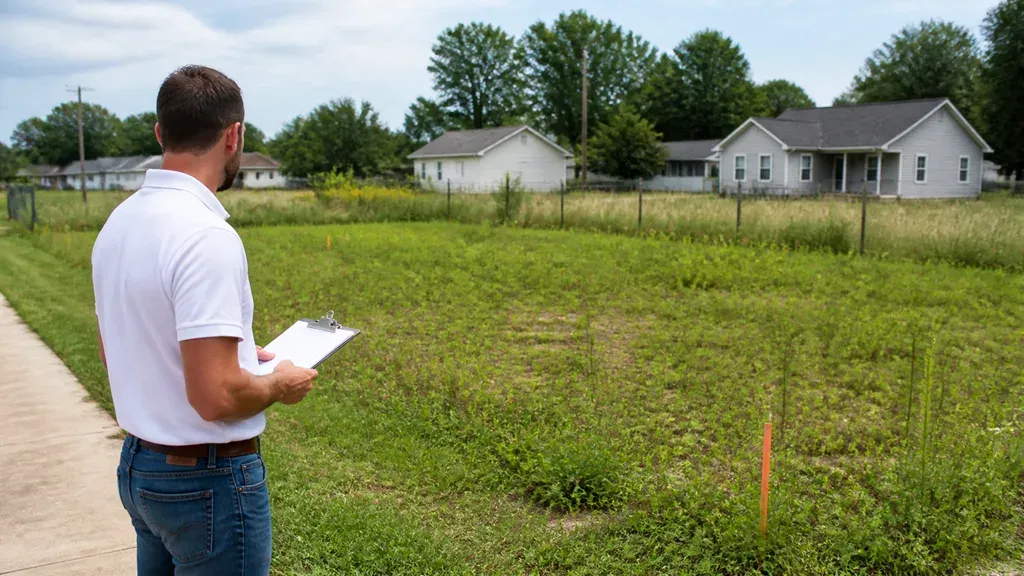
Why Selling Land Is Different Than Selling Your House in Indiana
Understanding these differences before you start helps you set realistic expectations and avoid the common mistakes that extend land sale timelines unnecessarily. Here are the four most significant ways selling land in Indiana differs from selling a house.
Difference 1: The Buyer Pool Is Smaller and More Specialized
When you sell a house, your potential buyer pool is essentially everyone who needs a place to live in your price range and location - a large and constantly refreshing group of people. When you sell land, your buyer pool shrinks dramatically and becomes much more specialized. The people buying land in Central Indiana are generally one of a small number of specific buyer types: farmers expanding their operation, residential developers looking for buildable lots, recreational buyers seeking hunting or fishing land, commercial developers looking for development sites, or land investors buying at a discount to hold or resell.
Each of these buyer types is much rarer than the average house buyer, and each has specific criteria that must match your property for them to be interested. A farmer will not buy landlocked parcels or land with poor soil productivity. A residential developer needs parcels with road frontage, appropriate zoning, and available utilities. A recreational buyer wants timber, water features, and wildlife habitat. The mismatch between what sellers hope for (any motivated buyer) and what actually exists (a small group of specialized buyers) is why land often sits on the market longer than comparable-value homes.
The practical implication: when you sell land, you need to identify which buyer type is most likely to purchase your specific parcel and market directly to that audience rather than waiting for a general MLS listing to find the right buyer on its own. Land-specific platforms, agricultural networks, and developer outreach are often more effective than the MLS for reaching the buyers who actually purchase Indiana land.
Sellers in Indianapolis and throughout Central Indiana who have successfully sold land parcels report that the first question they should have asked - "who is the most likely buyer for this specific land?" - was the one they asked last, after weeks of ineffective general marketing.
Difference 2: Financing Is Harder for Buyers and Sellers
House buyers have access to a well-developed, competitive mortgage market. Conventional loans, FHA loans, VA loans, and USDA rural housing loans are widely available for qualifying buyers, and lenders compete aggressively for that business. Land buyers face a meaningfully more restricted financing environment.
Vacant land loans are considered higher-risk by lenders because land has no income-generating structure and its value can be more difficult to establish with comparables. As a result:
- Down payments are higher: Most Indiana lenders require 20-35% down for raw land loans, compared to 3-20% for residential mortgages. On a $150,000 land parcel, a buyer may need $30,000-$52,500 upfront just for the down payment - which immediately reduces the pool of qualified buyers.
- Fewer lenders participate: Many large national banks and mortgage companies do not offer land loans at all, or offer them only to existing customers with significant assets. Regional banks, credit unions, and agricultural lenders (Farm Credit Mid-America is a primary Indiana agricultural lender) are more likely to finance land purchases than national banks.
- Interest rates are higher: Land loan rates typically run 1-3% higher than comparable residential mortgage rates because of the higher perceived risk and lower secondary market liquidity.
- USDA loans for rural land: USDA offers loan programs that can apply to rural land in Indiana, but these come with specific eligibility requirements related to the land’s location (must be in a designated rural area) and intended use. FSA (Farm Service Agency) loans are available for farmers purchasing agricultural land and often carry favorable terms for qualifying buyers.
The financing gap is one reason many Indiana land sales are cash transactions or seller-financed deals. Seller financing - where the land owner acts as the lender and the buyer makes payments directly to the seller over time - is more common in land sales than in residential sales, and it can significantly expand your buyer pool by reaching buyers who cannot qualify for a conventional land loan. If you are open to seller financing, specifying that clearly in your listing attracts a larger group of serious inquiries.
Sellers in Alexandria in Madison County who have offered seller financing on rural land parcels report meaningfully faster sale timelines than comparable listings requiring conventional financing - because seller-financed land reaches buyers that the conventional lending market excludes.
Difference 3: Due Diligence Is Different - and Often More Technical
When a house buyer does due diligence, they order a home inspection, review the title, and verify that the property is insured and livable. Land due diligence is often more technical and more variable depending on the intended use. As a land seller, understanding what buyers will investigate helps you prepare the right documentation and avoid surprises that derail a deal mid-contract.
Common land due diligence items in Indiana, by buyer type:
- Survey: Most serious land buyers will require a current survey confirming the boundaries, acreage, and any encroachments or easements. If your parcel has not been surveyed recently (within the last 5-10 years, depending on the buyer’s lender requirements), a new survey may be needed before or during the sale. Indiana licensed surveyor costs typically run $1,000-$5,000+ depending on parcel size and terrain complexity.
- Soil test and perc test: For land where a buyer intends to build a structure that will require a septic system (which is most land not served by municipal sewer), Indiana requires a soil evaluation - often called a perc test or soil feasibility test - to determine whether the soil can support a conventional or alternative septic system. This is conducted by a licensed soil scientist and approved by the local county health department. If a parcel fails the soil test, it cannot be built on without alternative septic solutions, which significantly affects value.
- Zoning verification: Land zoning in Indiana is controlled at the county or municipality level. A buyer’s intended use must be permitted under the current zoning classification. Buyers will verify this with the applicable county planning department before closing. If the current zoning does not permit the intended use, the buyer may need to seek a variance or rezoning - which can take months and is not guaranteed.
- Environmental assessment: For land that may have had prior agricultural chemical use, industrial activity, or underground storage tanks, buyers may require a Phase I Environmental Site Assessment before purchasing. Contaminated land can be difficult or impossible to sell at any price until remediation is complete.
- Soil productivity data: Agricultural land buyers in Indiana routinely evaluate soil productivity through publicly available soil maps (USDA Web Soil Survey) and on-site soil sampling. The Indiana Soil Productivity Index (SPI) score is a primary value driver for farmland - higher SPI parcels command higher prices per acre in the same geographic area.
Unlike house inspections, which typically follow a standard checklist, land due diligence varies significantly by parcel and buyer type. Sellers who proactively gather key documents - a current survey, recent soil tests, zoning confirmation, and any existing environmental reports - reduce the friction in the due diligence period and demonstrate transparency that builds buyer confidence.
Difference 4: Pricing and Valuation Work Differently
Houses are priced on a price-per-square-foot basis with comparables drawn from nearby sales of similar homes. Land is priced on a price-per-acre basis, but the comparables are harder to find and the variables that affect value are more numerous and less standardized.
Indiana land value drivers that differ from residential valuation:
- Road frontage and access: Land with paved road frontage is worth significantly more than landlocked land accessible only by easement. The type of road (state highway, county road, private gravel road) also affects value.
- Utility availability: Land with electric, water, and sewer available at the parcel boundary is worth substantially more than land requiring well and septic. In suburban Indianapolis growth corridors, utility availability is often the primary value driver for residential development land.
- Topography and drainage: Flat, well-drained land is more valuable for agricultural and development uses than land that is hilly, heavily timbered, or prone to flooding. Parcels in FEMA-designated flood zones may have significant development restrictions that affect value.
- Location relative to growth: Land in the path of suburban Indianapolis expansion - in the outer rings of Hamilton, Johnson, Hendricks, and Boone counties - is valued partly for its current use and partly for its development trajectory. Comparable sales from even a few years ago may understate current value in fast-growing areas.
- Comparable scarcity: In most Central Indiana counties, there are far fewer land sales than house sales in any given year. Finding truly comparable recent land sales - similar acreage, similar zoning, similar soil type, similar location - can be difficult, which is why land appraisals are sometimes based on fewer comparables and more adjustment factors than residential appraisals.
The practical result is that land pricing is less precise than house pricing, and sellers who price without recent comparable data often either overprice (which extends marketing time significantly) or underprice (which leaves money on the table). Consulting a land appraiser, a land-specialist real estate agent, or a cash land buyer who can provide a market-based offer gives you a realistic price anchor before you list.
Sellers in Carmel in Hamilton County and throughout Central Indiana who have sold land parcels after pricing them with current comparable data - rather than based on what they hoped to receive or what they paid years ago - consistently report a faster and less frustrating sale process than those who had to reduce price multiple times before finding the market.
Putting It Together: What This Means for Your Indiana Land Sale
Selling land in Indiana requires a different mindset, different marketing, and different preparation than selling a house. The buyer pool is smaller and more specialized. Financing is harder and may require seller financing to reach the full buyer universe. Due diligence is more technical and varies by intended use. Pricing relies on scarcer comparables and more variable factors.
If you own land in the Indianapolis area and want to understand your options - including a direct cash offer that bypasses the marketing and due diligence process entirely - Chris Buys Homes Indy purchases land parcels in Central Indiana and can provide a written offer within 24 hours. Call (317) 526-4712 or reach out through our site at contact-us. Whether you pursue the full marketing path or want a direct, simple transaction, knowing the landscape clearly is the first step toward a fresh start with that equity.