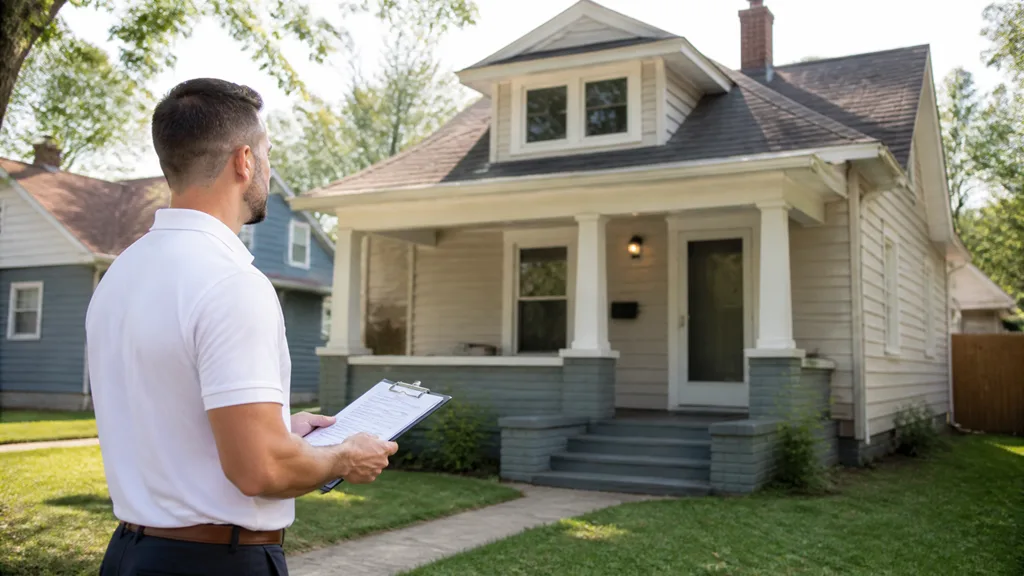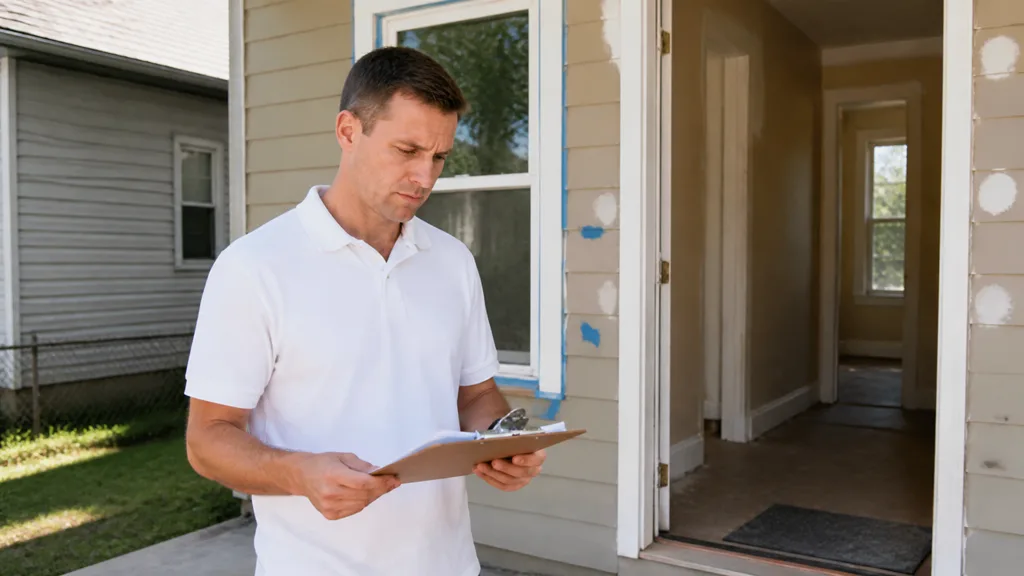



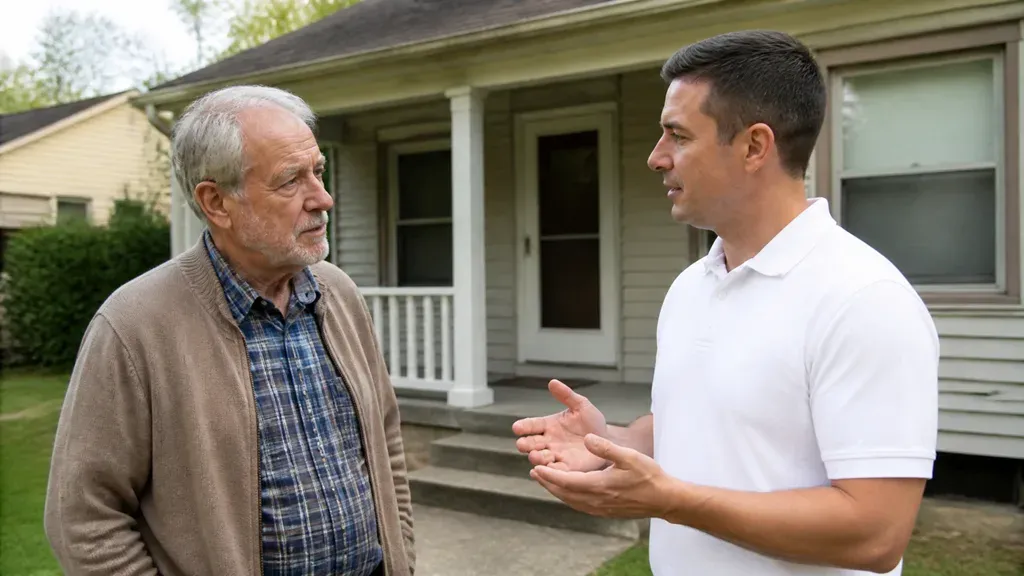
Would An Investor Buy My House In Indianapolis For Close To Asking Price?
Understanding why investors price the way they do - and how to evaluate whether the offer is actually reasonable for your situation - is what this post covers.
How Cash Investors In Indianapolis Calculate Their Offers
Professional home buyers are not guessing at numbers or making arbitrary offers. They work from a structured formula that accounts for everything they will need to spend after buying your home and the margin they need to make the deal worthwhile. The standard framework used by Indianapolis cash buyers is:
After Repair Value (ARV) - the price the home will sell for on the retail market once it is fully updated and in excellent condition - minus repair and renovation costs - minus holding costs (property taxes, insurance, utilities, financing during the renovation period) - minus the investor’s profit margin = the maximum offer the investor can make and still have the deal make financial sense.
For a concrete Indianapolis example: a home with an ARV of $220,000 that needs $35,000 in updates, with $15,000 in holding and transaction costs, and a 10% profit margin ($22,000) would support a maximum offer of approximately $148,000. That is not an arbitrary lowball - it is the math of what the investor can pay and still turn a viable project.
Investors who offer more than their formula supports are not being generous - they are taking on losses, and cash buyers who consistently overpay go out of business. The offer you receive from a reputable Indianapolis investor reflects a genuine assessment of costs and value, not a negotiating tactic.
What Your "Asking Price" Actually Represents
Your asking price is typically the retail market value of your home - what a buyer using conventional mortgage financing might pay after seeing the home on the MLS, attending a showing, and submitting a competitive offer. That retail price assumes:
- The home is in market-ready condition (or the buyer has factored in repair costs into their offer)
- The home has been marketed to the full buyer pool through the MLS
- The buyer has obtained mortgage pre-approval and can close on a lender-driven timeline
- You have paid agent commissions, closing costs, and any post-inspection concessions
The asking price does not represent what you take home - it represents the gross transaction amount before costs. On a $220,000 asking price in Indianapolis, a seller pays approximately $11,000-$13,200 in agent commissions, $1,000-$2,000 in closing costs and transfer tax, and often $2,000-$5,000 in post-inspection repairs or credits. Net proceeds after those deductions might be $200,000-$205,000 - not $220,000.
The Real Comparison: Net Proceeds, Not Headline Price
The question sellers should actually be asking is not "will the investor offer me my asking price?" - it is "will the investor’s net offer be meaningfully lower than what I would net through the agent process after all costs?"
Using the same Indianapolis example:
- Agent path: $220,000 asking price, minus $12,000 commission, minus $1,500 closing costs, minus $3,000 post-inspection concession = approximately $203,500 net proceeds, delivered in 60-120 days with uncertainty at each stage.
- Investor path: $148,000-$165,000 cash offer (depending on condition and investor), no commission, no post-inspection negotiation, no repair requirements = net proceeds equal to the offer, delivered in 14-30 days with a defined closing date.
That gap - roughly $38,000-$55,000 in this example - is real and the seller needs to decide if the speed, certainty, and condition flexibility of the investor path is worth that difference. For sellers with a market-ready home, no timeline pressure, and full capacity to manage the agent process, the agent path usually produces the better net outcome. For sellers with deferred maintenance, timeline constraints, or a need for certainty, the investor path frequently makes more financial and practical sense.
Where the comparison gets most interesting is on properties with significant repair needs. If a home needs $40,000 in updates to achieve its $220,000 ARV, the realistic agent list price is closer to $175,000-$185,000 (not $220,000), and after commissions and concessions the seller nets $160,000-$170,000 - while spending money on repairs and waiting 90+ days. An investor offer of $148,000-$158,000 on that same property starts to look much more competitive on a true net basis.
What Specifically Affects How Close To Asking Price An Investor Will Offer
Several property-specific factors in Indianapolis move an investor offer closer to or further from your asking price:
- Property condition: This is the largest single variable. A home that needs a new roof, HVAC replacement, foundation repair, or significant cosmetic work requires more capital from the investor, which reduces how much they can offer. A well-maintained home with systems in good working order allows the investor to offer closer to retail value because their repair budget is modest.
- Neighborhood ARV: The after-repair value ceiling varies significantly across Indianapolis. In neighborhoods where fully updated homes sell for $300,000+, there is more room between the investor’s offer and the distressed price. In neighborhoods where ARV tops out at $120,000, the investor’s margin for costs and profit compresses the offer more tightly against the floor.
- Time on market history: If your property has been listed and failed to sell through the MLS, that history affects investor confidence in the ARV. A home that sat 120 days without an accepted offer may be priced above what the retail market actually supports, which means the investor’s ARV estimate - and therefore their offer - may be lower than your previous asking price.
- Clear title: Outstanding liens, unpaid taxes, or title complications reduce what an investor can offer because they factor in the cost of resolving those issues at closing. A property with clean title and no encumbrances allows the investor to offer their maximum number without discounting for title resolution costs.
Can You Negotiate An Investor Offer In Indianapolis?
Yes, within limits. If you have documentation that supports a higher valuation - recent comparable sales in your neighborhood, receipts for major recent improvements (new roof, new HVAC, updated kitchen), or evidence that the investor’s repair estimate is overstated - presenting that information can support a higher offer. Reputable cash buyers in Indianapolis revise offers when presented with legitimate new information.
What will not work is simply asking for more without supporting evidence, or countering based on what you need to net rather than what the property is worth. An investor cannot pay more than the math supports - their formula is based on real costs, not negotiating room.
The most productive approach to negotiating an investor offer is to get multiple offers from different buyers. In Indianapolis, several reputable cash buying companies operate in the market. Getting two or three offers gives you real market data on what investors are willing to pay for your specific property in its current condition, and creates genuine competitive pressure that can improve terms.
You can also negotiate on terms beyond price. A longer closing timeline (giving you more time to find your next home), a rent-back arrangement that lets you stay in the property after closing for a defined period, or help with moving costs are all terms that cash buyers can sometimes accommodate and that add real value to the transaction even when the headline price does not move significantly.
When Investor Offers Come Closest To Asking Price
Investor offers approach retail market value most closely when the property is already in good condition and needs minimal work. A well-maintained Indianapolis home that needs only cosmetic updates - fresh paint, carpet, minor landscaping - leaves little room between an investor’s offer and the retail price. The repair and renovation component of the formula is small, which means the offer can be higher relative to ARV.
Conversely, investor offers are furthest below asking price on properties with significant deferred maintenance, functional obsolescence (outdated floor plans, small bedrooms, single bathroom), or location challenges that limit the retail buyer pool. In those situations the gap is structural - the property simply cannot support a retail price that would make the asking number achievable through either channel.
The Best Way To Find Out
The answer to "would an investor buy my house close to asking price?" is specific to your property, its current condition, its location within the Indianapolis metro, and the state of the market. The only way to get a real, accurate number is to ask for a written offer.
Sellers in Franklin in Johnson County, Lebanon in Boone County, and Alexandria in Madison County who have requested cash offers from Chris Buys Homes Indy consistently report that having the number in front of them - rather than guessing at what an investor might offer - gave them a fresh start on making a genuinely informed decision about which path to take. Call (317) 526-4712 or reach out at contact-us for a written offer within 24 hours, with no obligation to accept.